
Cognitive flexibility is the mental skill of holding one plan in mind, then switching to a different one when the situation calls for it. It’s what lets a child stop doing something one way and start doing it a new way, without getting stuck. A teacher changing the rules of a game mid-play, a word that means one thing in one sentence and something else in the next, a first approach to a problem that doesn’t work and needs a new one: all of it draws on this same skill.
A simple everyday version: the family always drives the same route to school. One day the road is closed, and you take a different way. A flexible response is curiosity about the new route. A rigid response is real distress that the plan changed at all.
There’s a pause, maybe a question or two, and then the new plan takes hold. A few seconds, or even a minute, of working it out is the skill operating normally, not failing to operate.
Real distress continues well past the moment of surprise, and the original plan keeps resurfacing even after the new one’s been explained more than once. This is the harder version of the skill, and it’s exactly what consistent practice is for.
Real life rarely runs on schedule. A canceled playdate, a substitute teacher, a recipe missing an ingredient. Cognitive flexibility is what lets a child absorb a change like this and keep moving, instead of getting stuck. The more practiced this skill becomes, the smaller these moments feel.
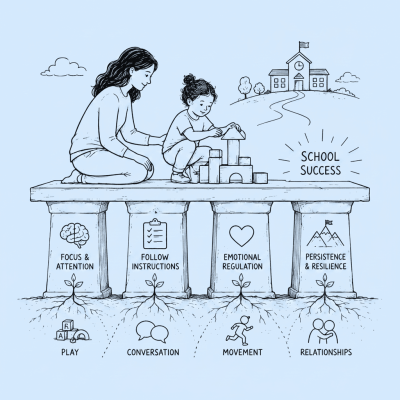
Switching between subjects, adjusting to a new teacher’s expectations, solving a problem a new way when the first approach doesn’t work all draw on cognitive flexibility. Researchers at Harvard’s Center on the Developing Child place this skill among the core capacities that support learning throughout school.
A child who has practiced adjusting to small changes is better equipped for the bigger ones ahead: a new school, a new sport, a friendship that shifts. This skill, built in small moments now, becomes a foundation for handling much larger changes later
The groundwork for this skill starts earlier than most parents expect, well before age 1, as a child’s brain begins building the basic capacity to pause and redirect attention. None of that is visible yet. What becomes visible, usually from around age 2 to 3 onward, is the skill in action: the ability to hold one plan in mind and switch to another when asked.
In the earliest years, almost everything feels like a fixed plan to a young child, and a change in that plan can feel like a real disruption. That’s the starting point every child begins from, not a setback. Children aren’t born with this skill already built. They’re born with the capacity to build it, and that building starts in infancy and continues for years.
With time, repetition, and the right kind of support, the ability to shift between ideas and adjust to something new gets easier and faster. This isn’t a single moment where the skill switches on. It’s a gradual build, continuing well into adolescence, and like most skills, the pace looks a little different in every child.
What helps it grow is consistent: low-stakes practice, a little warning before a change happens, and a parent who treats the adjustment as something being practiced, not something being failed.
A change in plan can genuinely feel like a real disruption. Sticking with one rule or routine, even after being asked to switch, is the expected starting point here.
This is a real turning point for this particular skill. Many children become able to switch between two different ways of sorting or thinking about the same thing, where a year earlier they couldn't.
Switching gets faster and needs less warning, though a genuinely sudden change can still take real effort to absorb.
Flexibility keeps strengthening through this window and well beyond it. Adjusting to a new teacher's expectations, a new rule, or a changed plan starts feeling more routine than disruptive.
Not just one warning. Two. “Ten more minutes at the park” lets the idea land. “Two more minutes” gives a final, concrete countdown. Say the next activity by name both times: “then we’re going home for dinner,” not just “then we’re leaving.”
Make a different route to school. Switch seats at the dinner table. Do bedtime in backwards order: brush teeth, then pajamas, then bath. Small, low-stakes changes your child has no real reason to resist are direct, low-pressure reps for this exact skill.
Simon Says is built for this: “do the opposite of what I say” flips the entire rule your child has been tracking. A card sort works the same way: sort by color for two minutes, then say “now sort by shape instead.” The pause before the switch is the practice.
In the moment: “I thought we’d have pasta, but we’re out of sauce, so let’s make something else instead.” Children build this skill partly by watching it modeled. After a hard switch, once your child is calm, add one short line: “that was a tough change, and you handled it.” Both moments teach the same thing.
“I know we said pasta, and now we’re not having pasta” said out loud, before moving on, gives the old plan somewhere to land instead of just vanishing. That small acknowledgment often does more than rushing to the new plan.
If a switch is going badly, an extra small step in between, like a minute of quiet before the new activity starts, gives more processing room than usual. That’s not a setback. It’s the right amount of help for tonight.
Free Download
Holding instructions and information in mind long enough to use them.
Mapping out the steps before starting something new.
Pausing before acting, even when something feels urgent.
Sticking with something hard until it’s all completed.
Staying with one thing, even with distractions nearby.
Keeping track of your belongings, time, and tasks.