
Educational content only. This article is built from CDC, AAP, and peer-reviewed research. It is not medical advice and does not replace your pediatrician’s guidance. If you have concerns about your child’s development, your doctor is the right first conversation, not this article.
In Mischel’s own follow-up analyses of the children from his delay-of-gratification studies, the ones who waited the longest weren’t the ones who stared down the treat with the most determination. They were the ones who stopped looking at it. Some covered their eyes. Some sang to themselves, or turned their chair around, or imagined the treat as something other than food entirely, a puffy cloud instead of a marshmallow. Self-control in young children, at least in this research, looked a lot more like redirection than resistance.
This lines up with the follow-up work on the same original participants years later: the children who’d used these attention-shifting strategies as preschoolers went on to show stronger self-control as adolescents, on measures that had nothing to do with treats or waiting games at all. Whatever they’d learned about managing their own attention in that one specific moment seems to have generalized well beyond it.
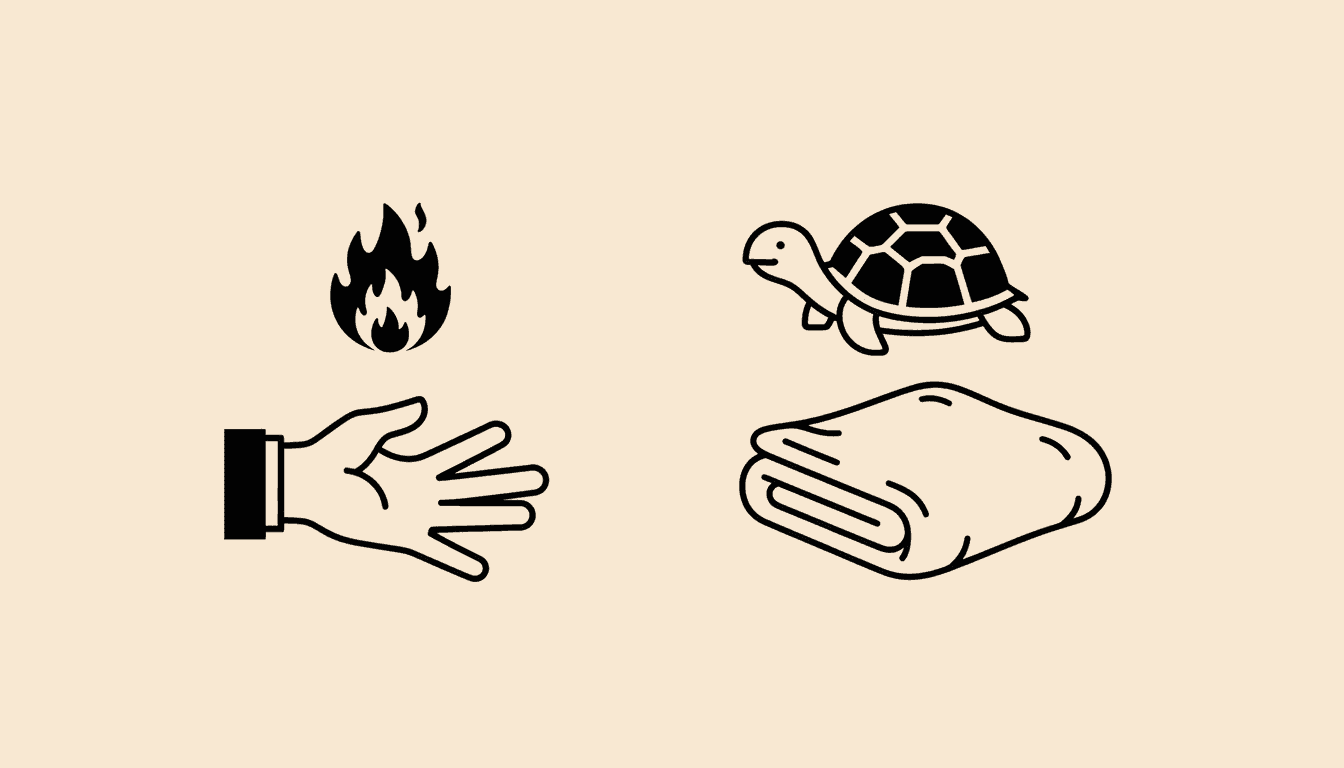
Psychologists Janet Metcalfe and Walter Mischel proposed a framework for why this happens, published in Psychological Review in 1999. They describe two systems at work during a moment of temptation: a hot system, fast and emotional, that responds directly to something desirable in front of a child, and a cool system, slower and more strategic, that can plan and hold a goal in mind. Looking directly at a tempting treat keeps the hot system fully activated. Looking away, or reframing what’s in front of her, lets the cool system take over instead.
This matters because it means willpower, in the sense of staring something down and resisting through sheer effort alone, is fighting the hot system on its own terms, a fight it’s built to win in the moment. Redirection sidesteps the hot system instead of trying to out-muscle it. A child fighting the hot system head-on is spending effort on a battle that gets harder the longer it lasts, since the treat never stops being right there in front of her. A child who’s looked away has removed the fuel the hot system needs to stay activated in the first place, which is a fundamentally easier position to hold.
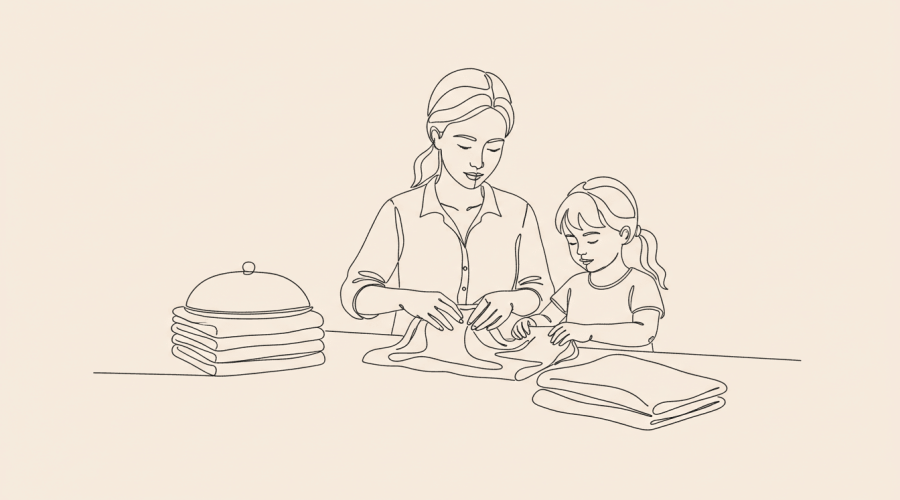
Once I understood this, I stopped telling my daughter to use her willpower and started giving her something else to do instead. Covering the tempting object with a cloth or moving it out of her direct line of sight does more than a stern reminder to wait ever did. Giving her a task, help me fold this laundry, count these blocks, occupies the same mental space that would otherwise be locked onto the thing she’s waiting for.
Turning the object itself into something less appealing in her imagination works too, and it’s a stranger trick than it sounds. A cookie described as a picture of a cookie, something to look at instead of eat, seems to lose some of its pull. None of this requires her to grit her teeth harder. It requires her to not be looking at the problem in the first place. I’ve noticed the same trick works for things well outside the original research: a car ride she’s dreading, a wait at a doctor’s office, a sibling’s turn taking longer than she’d like. The specific object changes. The underlying move, giving her attention somewhere else to go, doesn’t.
I used to think self-control was something a child either had enough of or didn’t, a kind of internal muscle some kids were born stronger in. This research suggests something more useful: self-control in young children is at least partly a set of learnable strategies, not a fixed capacity she’s stuck with. A child who struggles to wait may not yet know what to do with her attention in the moment temptation shows up, regardless of how much willpower she has.
That reframing changes what I’m teaching her. Instead of asking her to try harder at resisting, I’m handing her a specific, repeatable move: look away, do something else, wait for the timer instead of watching the clock. Those are things she can practice and get better at, in a way that gritting your teeth harder never manages to be.
I want to be honest about the limits here too. This particular research describes what helped children wait longer inside a specific kind of study, delay of gratification with a visible, desirable object. It doesn’t mean every kind of self-control, patience during a boring errand, calm during a disappointment, works through exactly the same mechanism. The redirection strategies are the clearest, best-supported piece of this research, and that’s the piece I’ve focused on here, not stretching it to cover every version of self-control a child might need.
The redirection strategies are the clearest, best-supported piece of this research, and that’s the piece I’ve focused on here, not stretching it to cover every version of self-control a child might need.
Not according to this research. Self-control in young children appears to be partly a set of learnable strategies instead of a fixed trait. Walter Mischel’s own follow-up analyses of children from his original delay-of-gratification studies found that the children who waited longest used specific redirection techniques, such as looking away or mentally reframing a tempting object, instead of resisting harder directly.
Psychologists Janet Metcalfe and Walter Mischel proposed this framework in a 1999 paper published in Psychological Review. It describes a fast, emotional ‘hot’ system that responds directly to something desirable, and a slower, strategic ‘cool’ system responsible for self-regulation. Looking directly at a temptation keeps the hot system activated, while looking away or reframing the object allows the cool system to take over instead.
Based on this research, moving the tempting object out of sight, giving the child an alternate task to occupy her attention, and mentally reframing the object as something less appealing all appear to help more than direct resistance. These strategies work by reducing how activated the hot, emotional response system becomes, instead of asking a child to fight that response head-on.
Not necessarily, and it’s worth being cautious here. This specific research describes delay-of-gratification situations involving a visible, desirable object. It doesn’t confirm that every kind of self-control, such as patience during a boring errand or calm during a disappointment, works through exactly the same mechanism. The redirection strategies described here are best supported for temptation-based waiting specifically.
Struggling to wait for something desirable at this age is ordinary and typically improves with practice at redirection strategies. It’s worth raising with your pediatrician if a child seems unable to use any redirection strategy even with repeated modeling and support, or if extreme difficulty waiting appears alongside other concerns involving attention or emotional regulation.
Share this article